
Seasonal Outdoor DIY Weather Calendar: What Each Season Is Good For
Month names are a rough guide. What decides whether a project works is the temperature of the soil, the wood and the night, how much moisture is around, and how many dry hours follow. This calendar explains what each season usually allows, what tends to go wrong, and how things differ across the country.
Treat it as a planning aid, not a schedule. A warm week in March or a cold snap in May overrides any calendar, which is why the 7-day project forecast checks the actual days ahead.
Early spring (roughly March to April)
Early spring is changeable: warm afternoons, cold nights, fast-moving fronts and plenty of rain. It rewards preparation more than big coating jobs.
Lawn: the pre-emergent window
This is the season’s most time-sensitive job. Crabgrass preventers (pre-emergent herbicides) stop seeds from establishing but do nothing to plants that are already up, so timing is everything. Crabgrass starts to germinate when soil at about 2 inches deep stays near 55°F for several days. Many extension services use a simple sign: apply when forsythia is in bloom, before it drops its flowers. Most pre-emergents need about half an inch of rain or irrigation within a few days to move into the soil. Our crabgrass preventer guide covers the details.
Decks: the wet-wood trap
A sunny April afternoon dries the surface of deck boards in hours, but the wood underneath can stay wet for much longer after a winter of snow and rain. Stain on wet wood can’t soak in, so it dries on top and peels. Before staining, do the water drop test or use a moisture meter; many stain makers ask for about 15% moisture or less. Early spring is a good time to clean the deck, replace boards and fix nails, leaving the stain for a warmer, drier stretch. See is your deck dry enough to stain?
Other jobs
- Pressure washing works once nights stay above freezing, so that water left in cracks, hoses and the pump doesn’t freeze.
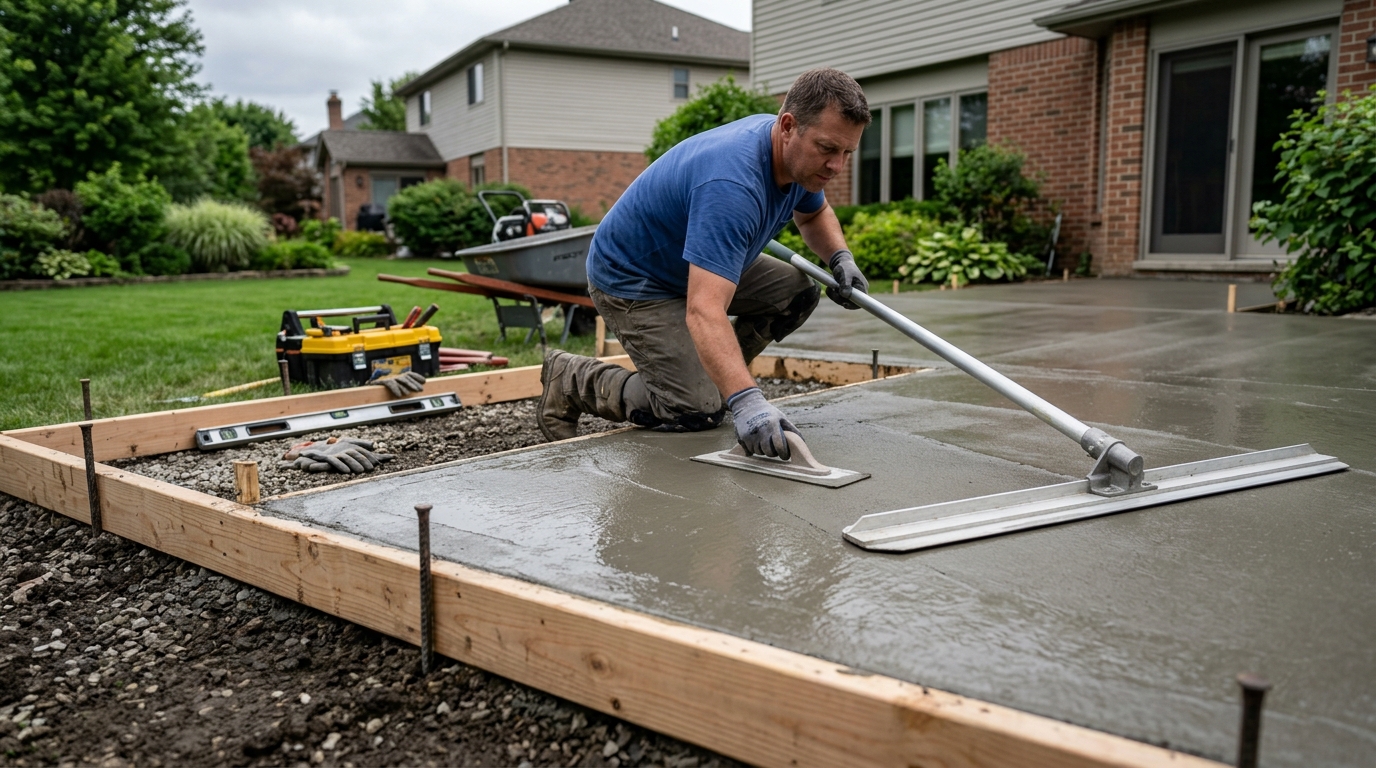
- Concrete: cool weather is fine if you protect the pour from frost for the first couple of days. Never pour on frozen ground.
- Exterior caulk can go on from about 40°F with many products, which makes early spring usable for sealing gaps you noticed over the winter.
Late spring to early summer (roughly May to June)
In most of the country this is the widest window of the year. Nights are warm enough for paint and stain to dry, humidity hasn’t peaked, and the days are long, which leaves plenty of drying time before evening dew.
- Deck staining and exterior painting: good days are common. Start after the morning dew has dried and plan for the stain’s rain-safe time, often 24 to 48 hours.
- Driveway sealing: warm pavement helps the sealer cure. Most products want 50°F or more during and after application, and many do best at 60°F or above.
- Weed control: weeds are growing actively and take up post-emergent products well. Pick a calm (but not dead-calm) morning with no rain for the product’s rainfast time.
- Garage floor epoxy: warm, fairly dry days suit it. Keep the slab well above the dew point.
The main hazard is thunderstorms. A day with a low rain chance can still bring a storm late in the afternoon, so look at the hourly forecast, not just the daily figure.
Mid to late summer (roughly July to August)
Summer heat creates its own problems. Many paints and stains list a maximum temperature around 90°F, and surfaces in direct sun can get far hotter than the air.
- Paint and stain: work early in the day, and follow the shade around the house or deck. A finish that dries too fast leaves lap marks and may not soak in.
- Concrete: pour early in the morning. Heat, low humidity and wind together can make the surface lose water faster than it can bleed up, which causes plastic shrinkage cracks. Start curing right after finishing.
- Weed killer: above about 85 to 90°F, weeds under heat stress absorb less, and some products (such as ester forms of 2,4-D) can vaporize and drift. Read the label’s temperature limit.
- Lawn fertilizer: cool-season lawns (fescue, bluegrass, ryegrass) are often stressed in midsummer, and many extension services advise against feeding them then. Warm-season lawns (Bermuda, zoysia, St. Augustine) are actively growing and are usually fed in late spring and summer.
In humid regions, summer also brings high dew points, so paint and stain dry more slowly and evening dew comes quickly on clear nights.
Early fall (roughly September to October)
Early fall is the second big window, and in many areas the best of the year for painting and staining: mild afternoons, lower humidity than summer and fewer thunderstorms. The catch is that days get shorter quickly and nights get colder.
- Finish earlier in the day. On clear fall evenings the temperature can drop to the dew point soon after sunset. Many painters stop by early afternoon so the finish has several hours to dry.
- Watch the overnight low. A 60°F afternoon followed by a 38°F night is a poor painting day even though the application temperature is fine.
- Driveway sealing: in the northern half of the country the season usually ends some time in fall, once nights regularly fall below about 50°F. Don’t leave it until the last warm weekend.
- Cool-season lawns: early fall is often recommended as the most important time to fertilize and to seed, with a final feeding later in fall in some programs. Follow your local extension service’s schedule.
- Caulking: a good time to seal gaps around windows, doors and trim before winter, as long as the caulk has time to cure before hard frost.
Our guide to how late in the fall you can stain, paint or seal goes through the cut-offs project by project.
Late fall and winter (roughly November to February)
In most of the northern U.S., outdoor coating work stops. Temperatures sit below product minimums for weeks, and even mild days are followed by freezing nights. This is the time to plan and prepare:
- Inspect caulk, paint and deck boards and make a list for spring.
- Drain hoses and pressure washer pumps before freezing weather.
- Garage floor epoxy is possible only if you can keep the garage and the slab within the product’s temperature range while it cures, usually 50°F or more.
- Concrete can be poured in cold weather by professionals with heated enclosures, accelerators and insulated blankets. For DIY pours, waiting is usually the better choice.
In the South, the Gulf Coast, Southern California and the desert Southwest, winter can be a good season for outdoor work. Days in the 60s and 70s with low humidity suit painting and staining, as long as the nights stay above the product’s minimum and the dew has time to dry.
How the seasons shift by region
| Region | Usually best for coatings | Watch out for |
|---|---|---|
| Northeast and Great Lakes | Late May to September | Cold nights in spring and fall; long wet spells |
| Midwest and Plains | May to September | Big temperature swings, strong winds, thunderstorms |
| Southeast and Gulf Coast | Spring and fall | High humidity and dew, afternoon storms in summer |
| Texas and the Southwest | Fall through spring | Extreme summer heat, very dry air, summer monsoon storms in Arizona and New Mexico |
| Pacific Northwest | July to September | Long rainy season; wood can stay wet well into spring |
| Mountain West | Late spring to early fall | Cold nights even in summer at altitude, afternoon storms |
These are broad patterns. Elevation, distance from the coast and the year’s weather can shift them by weeks.
Your yard has seasons of its own
The forecast is for a 2.5 km grid cell, but conditions vary across a single property:
- South- and west-facing walls warm up fast and dry early; north walls stay cool and damp longer.
- Decks under trees dry slowly after rain and collect pollen and debris.
- Low spots collect cold air on calm nights, so frost and dew form there first.
- Dark asphalt and deck boards in full sun can be much hotter than the air.
Before you start, check the actual surface: is it dry, is it in the product’s temperature range, and when will the sun reach it or leave it?
Putting the calendar to work
Use the season to decide which projects to plan, and the 7-day forecast to decide which day. The home page forecast scores ten projects for each of the next seven days, so you can see at a glance whether this week suits staining, sealing or neither. Then confirm the day before, and follow the product label.
Frequently asked questions
What is the best month to paint a house exterior?
In much of the U.S., late spring and early fall offer the most suitable days: mild afternoons, moderate humidity and nights that stay above the paint’s minimum. In the South and Southwest, fall through spring is often better than summer. The right day matters more than the month, so check the forecast.
When should I put down crabgrass preventer?
Before crabgrass germinates, which starts when the soil at about 2 inches deep stays around 55°F for several days. Many extension services suggest applying when forsythia is in bloom. See our crabgrass preventer guide for details.
Why is deck staining in early spring risky?
After winter, the boards can stay wet inside for weeks even when the surface looks dry, and nights are often too cold for stain to dry. Test the wood with a few drops of water or a moisture meter, and wait for nights that stay above about 50°F.
How late in the year can I seal my driveway?
Most asphalt sealers need about 50°F or warmer during application and for roughly the next 24 hours, with no rain. In the northern U.S. that usually ends some time in fall; in the South it can last much longer. Check the label and the forecast.
Check the forecast for your project
Enter your ZIP code to see which of the next 7 days fit, hour by hour: seal a driveway, fertilize the lawn, spray weed killer, stain a deck, caulk outside.